Turning Guiding Principles intoOperational Reflexes
A group experience to help participants understand the procedures and develop the right habits.
Context
The first step in developing an effective compliance policy on a given topic is to define the key principles that will subsequently underpin all related procedures.
This overarching framework provides meaning and consistency across the entire system. More importantly, it helps employees navigate grey areas by referring back to these guiding principles when the applicable rules do not provide an immediate answer.
The remaining challenge is to ensure that employees genuinely understand and internalise these principles.
The Challenge
A principle expressed in abstract terms may appear broadly acceptable without necessarily being operationally useful.
Concepts such as independence, transparency, proportionality, accountability or the pursuit of a legitimate benefit only acquire real meaning when applied to concrete situations.
The challenge was therefore to create a solution that would enable employees to make these principles their own and recognise that procedures are, ultimately, the practical expression of these broader principles.
The Solution in a nutshell
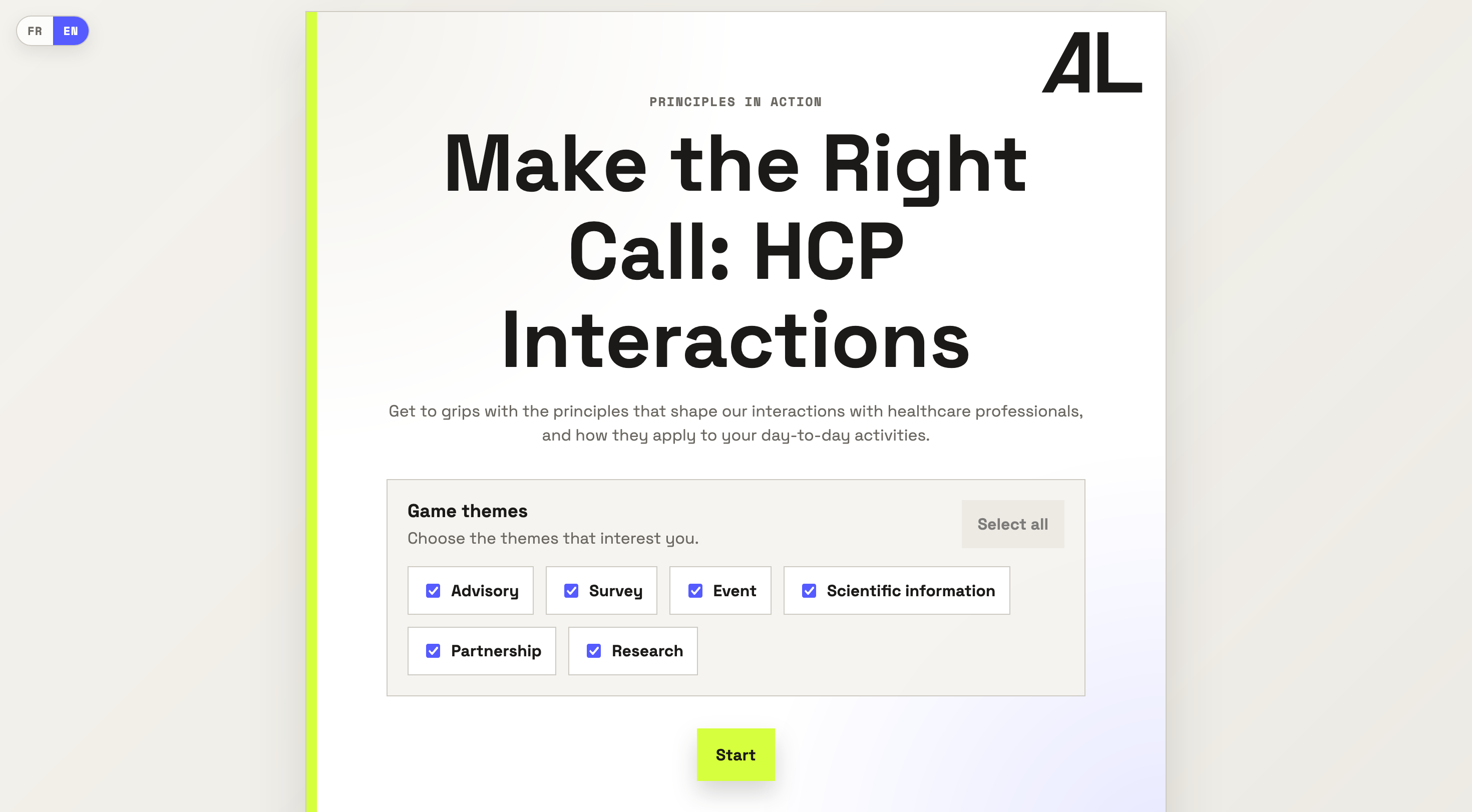
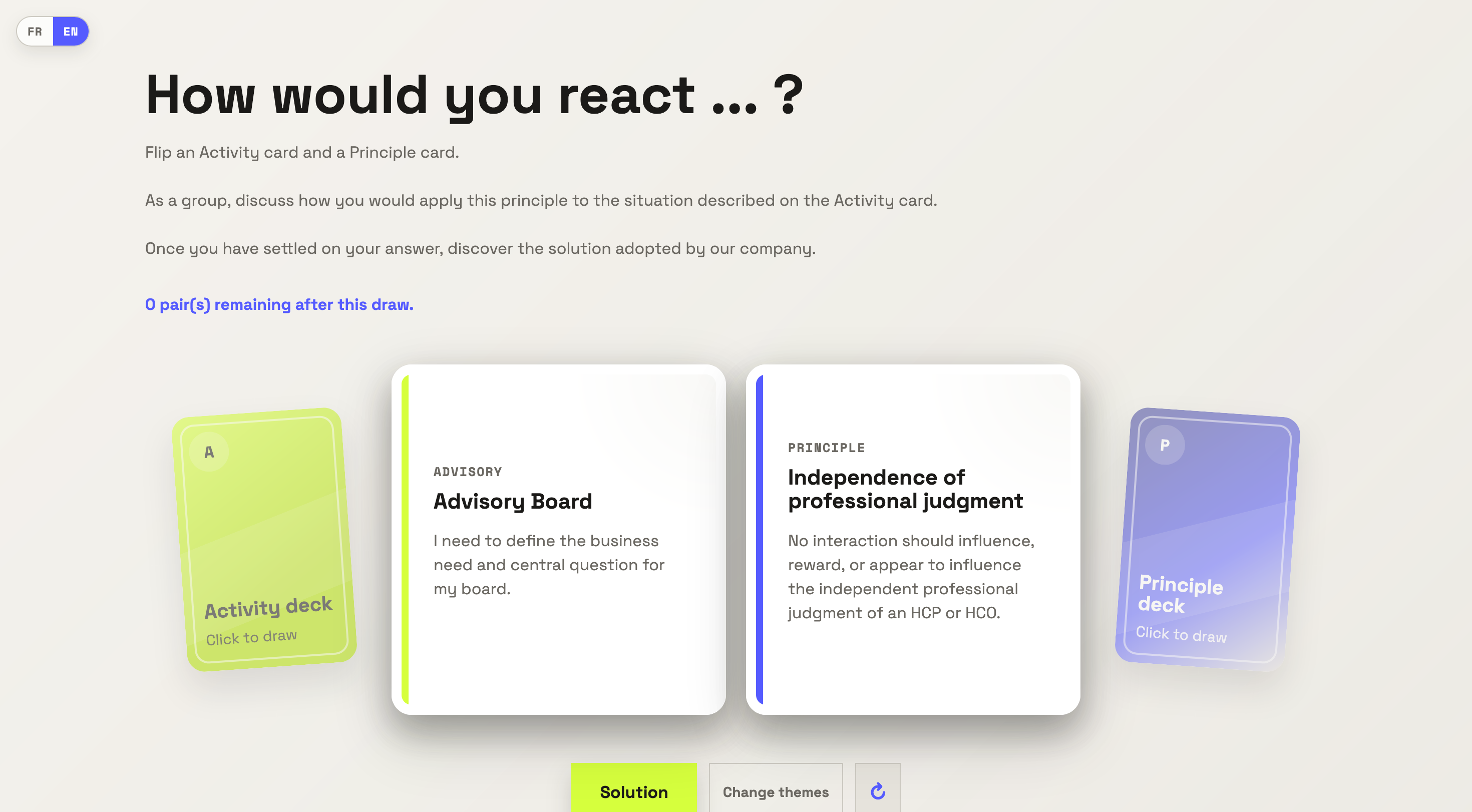
A collaborative digital card game facilitated by the manager, pairing a Group guiding principle with a real-life business situation. Teams discuss how the principle should shape their decision before revealing the organisation’s expected approach and the related procedural requirements.
See below for more details
Value Created
This approach transforms the rollout of a Group policy into a collective learning experience that is closely connected to employees’ day-to-day realities.
In particular, it helps to:
- Provide meaning and rationale to rules and procedures.
- Make them easier to remember and internalise.
- Strengthen employees’ ability to address new or unforeseen situations.
- Position managers as active advocates and enablers of the policy.
Over time, employees no longer apply a rule solely because it appears in a procedure. They understand the rationale behind it and can use that rationale to inform their own judgement.
Active Learning
Each round combines two elements:
- A guiding principle drawn from the Group policy.
- A situation requiring a decision, or a context directly related to the participants’ activities.
Based on this combination, employees are invited to discuss collectively how the principle should guide the response to the situation.
They can compare their interpretations, identify areas of uncertainty and articulate the operational implications they associate with the principle: expected behaviours, questions to consider, decisions to avoid and areas requiring particular vigilance.
The solution therefore places participants in an active learning role. Rather than being immediately presented with the applicable rule, they first build the reasoning that could justify it themselves.
Learning Through Discussion and Revelation
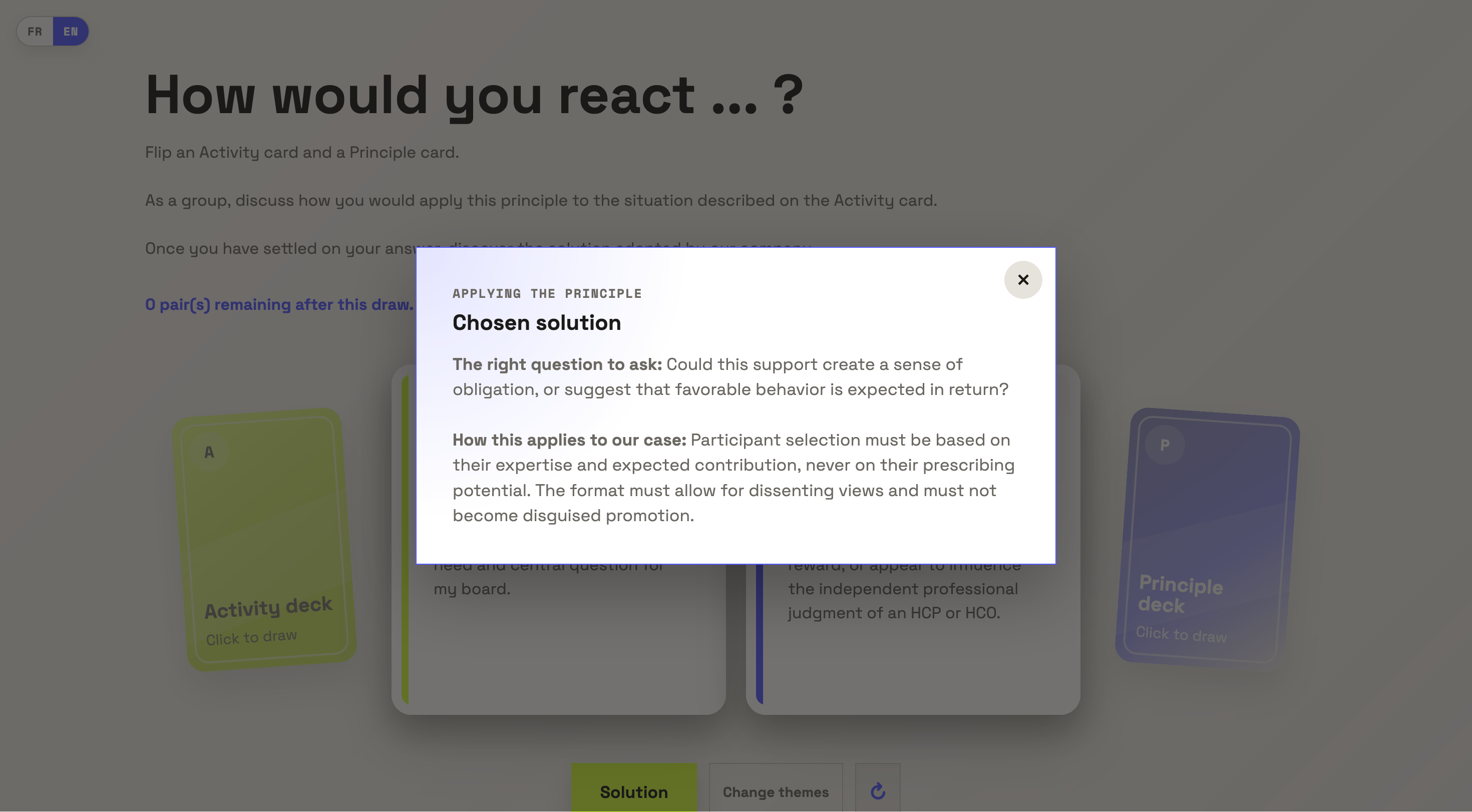
After each discussion, the game introduces a reveal phase.
This second stage explains how the principle applies in practice to the activity concerned and directs participants to the corresponding provisions of the applicable procedure.
The purpose of the reveal is not merely to provide the correct answer. It enables the group to compare its reasoning with the framework established by the organisation, clarify any differences in interpretation and understand why particular rules were adopted.
Employees therefore no longer encounter a procedure as a succession of isolated requirements. They can connect each requirement to a broader intention that they have already explored.
The manager plays an essential role in this process. They facilitate the discussion, help the team contextualise the principles and identify the implications specific to their operational environment.